
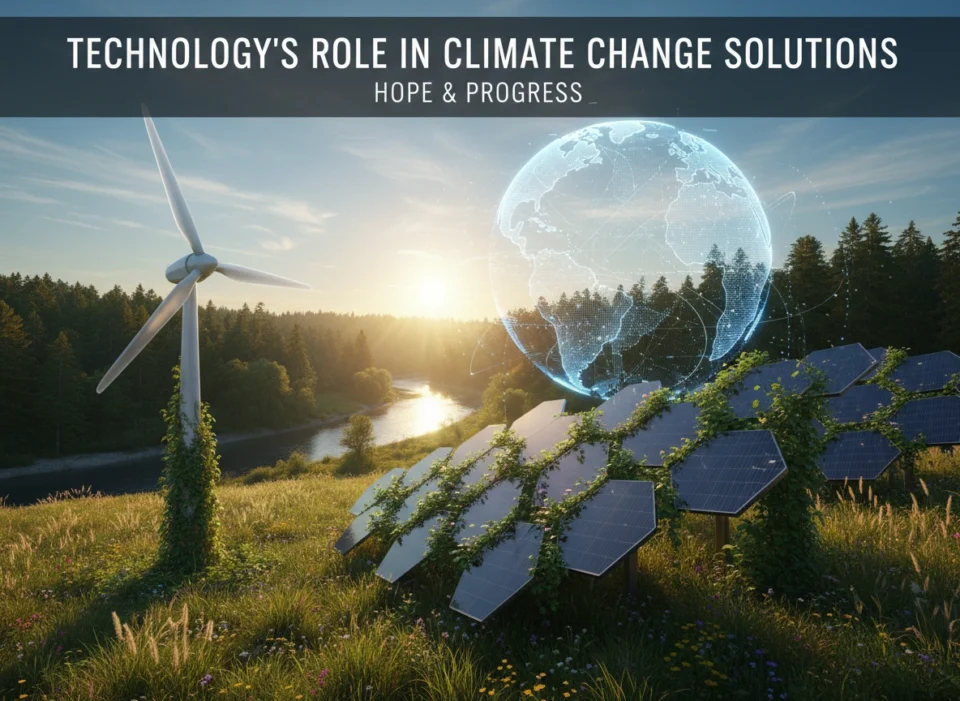
Our planet is at a critical juncture. The challenges presented by climate change demand innovative, scalable, and effective solutions. While the problem is complex, a powerful ally has emerged in the fight for a sustainable future: technology. From generating clean energy to optimizing resource management, technology offers a suite of tools to mitigate the impacts of climate change and transition toward a greener global economy. This article explores the pivotal role technology plays in addressing one of the most significant challenges of our time.
Powering the Future with Renewable Energy
The foundation of climate action lies in decarbonizing our energy systems. For decades, the world has relied on fossil fuels, but technological advancements are making renewable energy sources more viable, affordable, and widespread than ever before.
The Solar and Wind Revolution
Solar panels and wind turbines are perhaps the most visible symbols of the clean energy transition. Continuous innovation has dramatically increased their efficiency while simultaneously driving down costs. For example, the cost of solar photovoltaic (PV) power has fallen by over 85% in the last decade, making it one of the cheapest sources of new electricity in many parts of the world.
These technologies are not just for large-scale utility projects. Advances in materials science are leading to flexible, lightweight solar cells that can be integrated into building materials, vehicles, and even clothing. Similarly, offshore wind farms are tapping into stronger, more consistent winds, generating massive amounts of clean power to support coastal cities.
Next-Generation Energy Storage
A primary challenge for renewables like solar and wind is their intermittent nature—the sun doesn’t always shine, and the wind doesn’t always blow. This is where energy storage technology becomes crucial. Lithium-ion batteries, the same kind that power our smartphones and electric vehicles, are being deployed at a grid scale. These massive battery farms can store excess energy generated during peak production times and release it when demand is high or generation is low, ensuring a stable and reliable power supply.
Researchers are also exploring other solutions, such as flow batteries and green hydrogen. Green hydrogen is produced by using renewable electricity to split water molecules. This hydrogen can then be stored and used later to generate electricity, power vehicles, or for industrial processes, offering a versatile and carbon-free energy carrier.
Carbon Capture and Utilization: Cleaning the Air
While transitioning to renewables is vital, we also need solutions to address existing carbon dioxide (CO2) in the atmosphere and emissions from hard-to-abate sectors like cement and steel manufacturing. Carbon Capture, Utilization, and Storage (CCUS) technologies are designed to do just that.
Direct Air Capture (DAC)
Direct Air Capture facilities act like giant air purifiers, using chemical processes to pull CO2 directly from the ambient air. Once captured, the CO2 can be permanently stored deep underground in geological formations or utilized in other applications. For instance, captured CO2 can be used to create synthetic fuels, building materials like “carbon-cured” concrete, or even in greenhouses to boost plant growth. While still an emerging and costly technology, DAC holds immense promise for removing historical emissions.
Point-Source Capture
In addition to pulling CO2 from the air, technology can capture it directly at its source, such as a factory smokestack or a power plant. This process prevents CO2 from entering the atmosphere in the first place. The captured carbon can then be transported via pipelines for permanent storage or commercial use. This approach is critical for decarbonizing heavy industries where emissions are currently unavoidable.
AI and Data Analytics: The Brains of the Operation
Artificial intelligence (AI) and big data are transforming our ability to understand, monitor, and manage environmental systems with unprecedented precision. These digital tools provide the intelligence needed to optimize our climate strategies.
Enhancing Climate Modeling and Prediction
AI algorithms can process vast datasets from satellites, weather stations, and ocean sensors to create highly accurate climate models. These models help scientists predict the effects of climate change with greater certainty, enabling governments and communities to prepare for events like hurricanes, droughts, and sea-level rise. This predictive power is essential for building resilient infrastructure and protecting vulnerable populations.
Optimizing Energy Grids
Smart grids use AI and the Internet of Things (IoT) to create a more efficient and resilient electrical system. IoT sensors collect real-time data on energy production and consumption. AI algorithms then analyze this data to balance supply and demand, reroute power during outages, and seamlessly integrate fluctuating renewable energy sources. This optimization reduces energy waste and lowers costs for consumers.
Precision Agriculture for a Sustainable Food System
The agricultural sector is a significant contributor to greenhouse gas emissions and is highly vulnerable to climate impacts. Technology is helping to create a more sustainable food system. Precision agriculture uses drones, sensors, and GPS-guided tractors to give farmers detailed insights into their fields. This allows them to apply water, fertilizer, and pesticides only where needed, reducing waste, lowering emissions, and improving crop yields.
Advancing Sustainable Practices and a Circular Economy
Technology is also a key enabler of the circular economy—a model that emphasizes reusing, repairing, and recycling materials to minimize waste.
The Rise of Sustainable Materials
Innovations in material science are leading to the development of eco-friendly alternatives to traditional products. This includes plant-based plastics that are biodegradable, lab-grown meats that reduce the environmental footprint of livestock farming, and new types of recyclable packaging. These materials help reduce our reliance on finite resources and decrease the amount of waste sent to landfills.
Smart Logistics and Supply Chains
Data analytics and AI are making supply chains more efficient and less carbon-intensive. Companies can use technology to optimize delivery routes, reducing fuel consumption and emissions. Blockchain technology can also enhance transparency, allowing consumers to track a product’s journey from source to shelf and verify its sustainability claims.
The Path Forward: Challenges and Opportunities
Despite the incredible potential of technology, its deployment is not without challenges. High initial costs, the need for supportive government policies, and ensuring equitable access are significant hurdles. Furthermore, the production of technologies like batteries and solar panels requires energy and raw materials, so it is crucial to ensure their entire lifecycle is as sustainable as possible.
Looking ahead, the fusion of different technologies will likely yield the most powerful climate solutions. Imagine smart cities where AI manages energy and traffic flow, buildings are constructed with carbon-capturing materials, and transportation is entirely electric and autonomous. Continued investment in research and development, combined with global collaboration and forward-thinking policy, will be essential to turn these technological possibilities into widespread realities.
Technology alone is not a silver bullet, but it is an indispensable tool in our global effort to combat climate change. By harnessing the power of innovation, we can accelerate the transition to a low-carbon economy, protect our planet for future generations, and build a more sustainable and prosperous world.
Please click here for more info.
